ICHRA vs. Traditional Group Health Plans

Compare how each approach works across cost structure, employee choice, enrollment, and administration - and where each model may fit different employer needs.

Costs

Benefits

Enrollment

Comparison

How the two approaches compare

Both ICHRA and traditional group health insurance can work well depending on employer size, workforce distribution, budget strategy, and employee coverage needs. This comparison highlights the operational differences employers should review before choosing a model.

Feature

ICHRA with ICHRA with

Traditional group health insurance

Employer Costs

Defined monthly allowances help employers structure benefits spending with greater budget visibility.

Premiums are typically set by the group plan and may change at renewal.

Employee Choice

Employees can compare available individual health plan options in their local market.

Employees usually choose from the plan options selected by the employer.

Coverage Continuity

Individual coverage may continue if employment changes, subject to plan eligibility, premium payment, and carrier rules.

Coverage is generally tied to employment and group plan eligibility.

Plan Administration

Employer setup, enrollment paths, allowance visibility, premium documentation, and reporting records are managed through one connected platform experience.

Administration often involves carrier renewals, broker coordination, payroll updates, and internal HR processes.

Renewals

Employers can review allowance strategy and plan design before each plan year.

Renewals often involve carrier rate changes, plan updates, and employer contribution decisions.

Multi-State Teams

Employees can shop individual plan options available in their own local market.

A single group carrier or network may not fit every employee location equally well.

Employee Experience

Employees can evaluate plan options based on estimated cost, coverage details, and personal needs.

Employees select from a shared group plan menu chosen for the broader workforce.

Budget Planning

Defined allowances can support more predictable benefits budgeting.

Annual premium changes can make future benefits costs harder to forecast.

Compliance Support

Lirvion helps support eligibility setup, affordability review, ACA reporting workflows, and compliance records.

Employers typically manage compliance with broker, carrier, payroll, and HR support.

Best Fit

Distributed teams, growing companies, defined allowance strategies, and employers seeking more employee choice.

Stable local workforces, strong group plan options, and employers that prefer a traditional benefits model.

Choosing the right benefits strategy

Both ICHRA and traditional group coverage can be effective. The right approach depends on workforce structure, budget strategy, employee locations, and how much plan choice or employer control the company needs.

User in the center of the healthcare infrastructure

ICHRA

may fit when

  • You have distributed or multi-state teams
  • You want a defined monthly benefit budget
  • Employees benefit from more individual plan choice
  • Allowances need to vary by employee class or location
  • You need a more flexible approach for a growing workspace
Hospital surrounded by users

Group Coverage

may fit when

  • Your workforce is concentrated in one local market
  • You prefer a traditional employer-selected plan model
  • Local carrier networks are strong
  • Employee coverage needs are relatively similar
  • You want to maintain a familiar group benefits structure
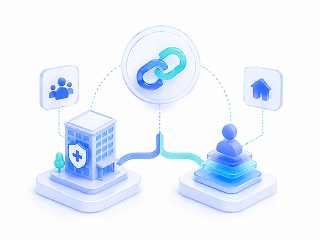
Connection between Hospital and User

A Hybrid Strategy

may fit when

  • Different employee groups have different coverage needs
  • Some teams are local while others are distributed
  • The employer wants to transition gradually
  • Group coverage remains valuable for certain classes
  • ICHRA may support other eligible employee classes

Employee experience

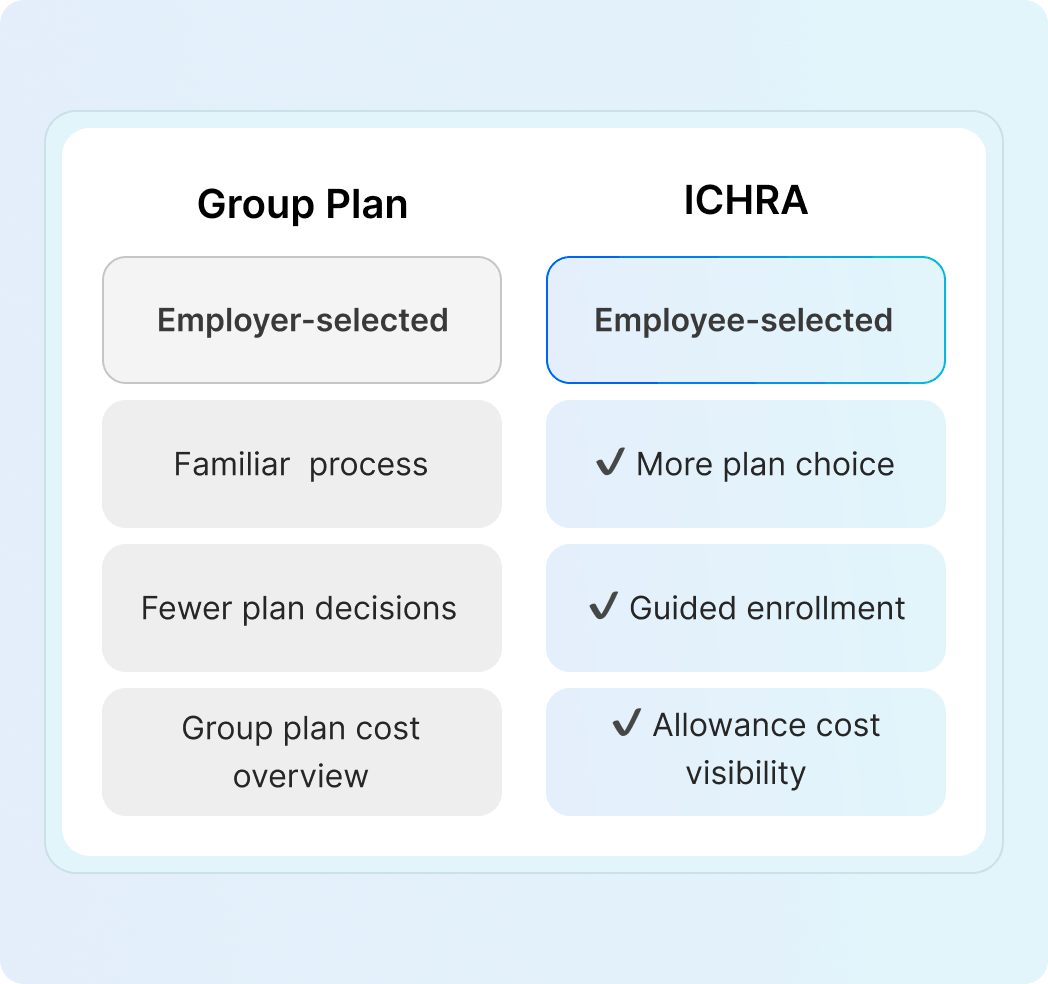
Group coverage typically gives employees a familiar, employer-selected plan menu. ICHRA gives employees more individual plan choice, which makes guidance, cost visibility, and enrollment support especially important.

With a clear platform experience, employees can compare available individual health plan options, see their estimated cost after the employer allowance, and complete the enrollment path configured through their employer's Lirvion setup.

The employee experience depends on clarity, guidance, and support - not only the benefits model itself.

Employee experience

Cost Predictability

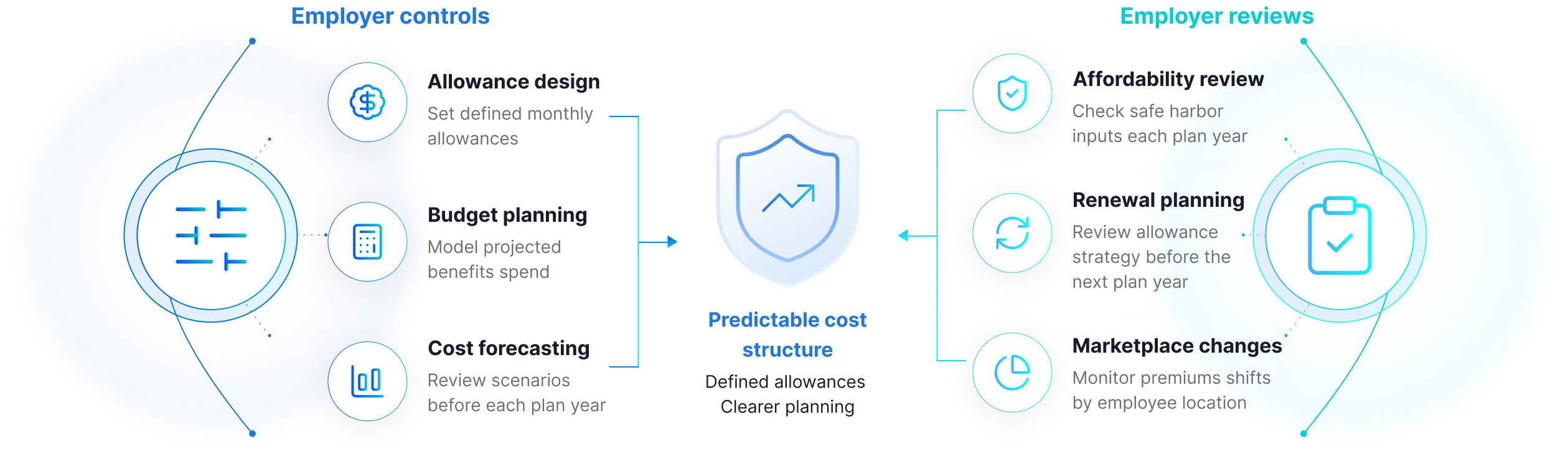
ICHRA can help employers structure benefits around defined monthly allowances instead of renewal-driven group premiums. Employers still need to review affordability, Marketplace premium changes, and allowance strategy each plan year - but this approach is designed to support clearer budget visibility ahead of plan and renewal.

Predicatable cost structure breakdown

Plan the right benefits strategy for your team

The right benefits model depends on your team structure, employee locations, budget strategy, and plan choice needs. Lirvion helps employers compare ICHRA, traditional group coverage, and class-based hybrid options with clearer context.